
Does your MSP understand the business?
Or are they prescribing the same stack, roadmap, and monthly bundle to every company they meet?
I help startup founders cut through frickin’ technical noise, challenge questionable advice, and turn expensive technology confusion into confident business decisions—before bad decisions become inherited problems.
Full-strength technology leadership. Fractional commitment. Frickin zero buzzword casserole.
Experience beyond the pitch deck
Technology rarely fails in isolation. It fails when ownership is unclear, advice goes unchallenged, risk is invisible, and nobody connects the frickin’ technical decision to the business outcome.
Or are they prescribing the same stack, roadmap, and monthly bundle to every company they meet?
Keeping systems alive matters. Making sure technology supports where the company is going matters more.
“Nothing bad has happened yet” is not a risk strategy. It is the opening scene of a suspense movie.
Startups can build clean from day one. Established companies can stop adding floors to a crooked foundation.
If the project started with “we need AI” instead of a measurable problem, we should probably back up.
Vendors own quotas. Teams own today’s emergencies. Someone still needs to own what happens next.
That is not an insult. It is due diligence. Great technicians, capable vendors, and smart internal teams can still lack the executive perspective needed to evaluate growth, risk, operations, people, and money.
“My job is not to replace good people. It is to make sure leadership gets good answers, sees the whole board, and makes the right move.”
Jeff Davis · The Frickin FracI can work above the technology stack with leadership and deep inside it with the people responsible for delivery.
I turn business goals into a practical technology plan covering priorities, architecture, budgets, sequencing, ownership, and measurable outcomes. Leadership sees what should happen now, what can wait, and what the company should stop spending money on.
I independently evaluate proposals, contracts, recommendations, service performance, staffing, and technical claims. Your providers and internal team get clear expectations, while leadership gets an honest view of whether the work, costs, and results actually line up.
I guide decisions across networks, servers, endpoints, Microsoft 365, Azure, AWS, communications, internet, cabling, and workplace systems—making sure the environment is reliable today without becoming tomorrow’s expensive Frickin rebuild.
I connect security controls to real business risk, recovery expectations, customer requirements, and insurance obligations. That includes incident readiness, backup and disaster recovery, identity protection, vendor risk, SOC 2, PCI DSS, NIST, and a plan people can actually execute.
I find repetitive work, slow handoffs, inconsistent decisions, and costly friction before recommending technology. AI and automation must reduce time, risk, or expense—not merely give everyone a shiny new experiment to ignore in six weeks.
I design connected solutions using sensors, environmental monitoring, cameras, access control, and operational alerts. The goal is better visibility, faster response, safer facilities, and fewer unpleasant surprises hiding behind walls or inside equipment.
I lead migrations, acquisitions, major purchases, integrations, budgeting, team development, and high-stakes initiatives. Before an investor, buyer, customer, or crisis asks the difficult questions, we make sure the company has credible answers and accountable owners.
This is not a four-step consulting diagram designed to decorate a proposal. It is how we get from “something feels wrong” to a decision somebody owns.
We test what your team and vendors say against the evidence. Assumptions stop getting promoted as facts.
We identify what can break, who it affects, what it costs, and how fast the problem can spread.
You get clear options, tradeoffs, owners, costs, and timing—then leadership makes an actual decision.
I hold teams and vendors accountable until the Frickin problem is resolved, measured, and unlikely to return.
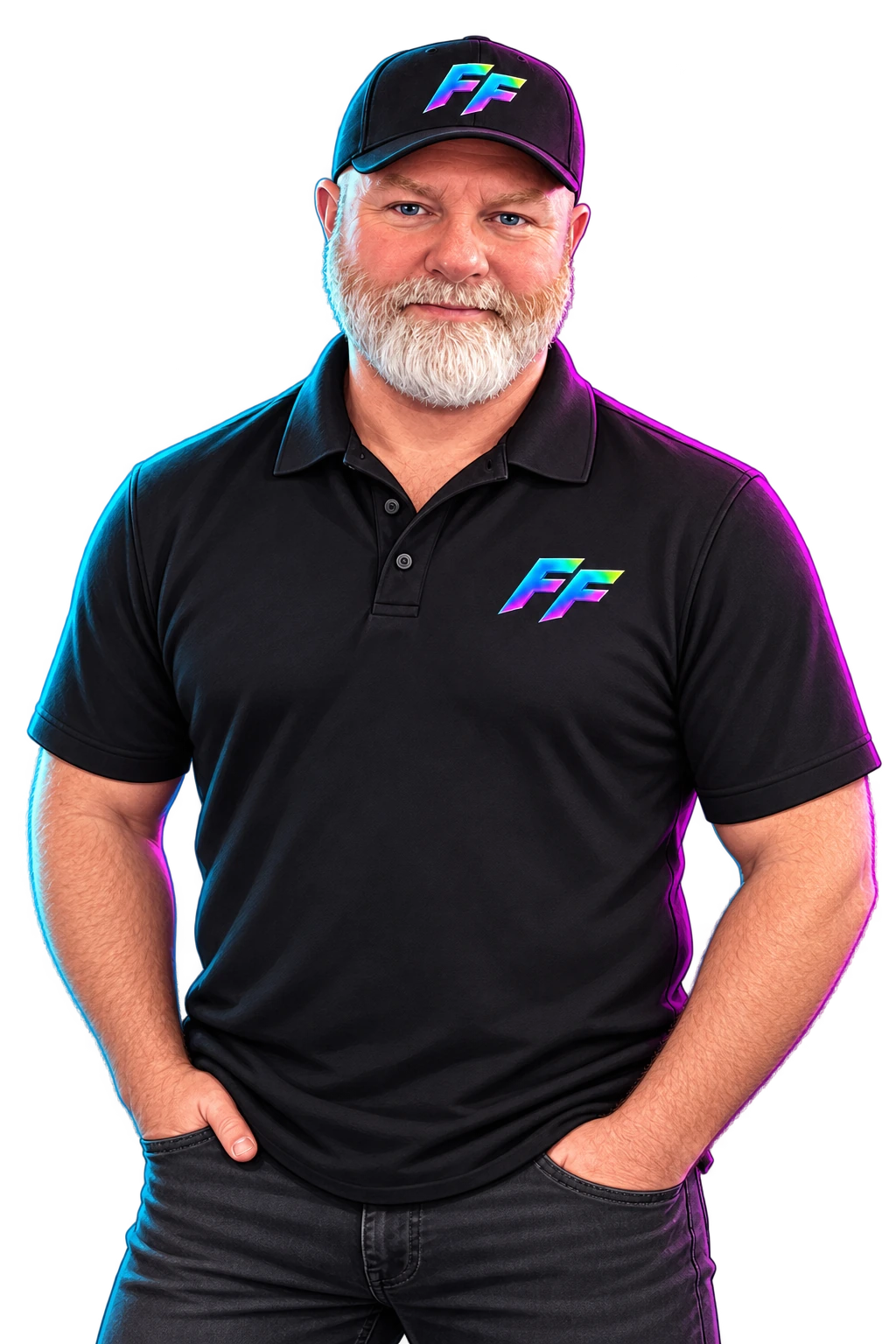
Jeff has engineered systems, led projects and operations, advised executives, built and operated a managed services provider for 16 years, sold it, and moved on with both the lessons and the scars.
Today, he serves startups and established organizations as a Fractional CTO—connecting business strategy to IT, IoT, cybersecurity, cloud, infrastructure, AI automation, vendors, budgets, and people.
The questions founders actually ask, answered without the buzzword casserole.
A fractional CTO is an experienced technology executive who works with your company part-time. You get senior judgment on your roadmap, budget, vendors, security and architecture without the full-time executive payroll. At Frickin Frac, that’s Jeff Davis: full-strength technology leadership, fractional commitment, zero buzzword casserole.
Non-technical startup founders who know their business cold and shouldn’t have to become IT experts to make good technology calls. If your tech decisions come from a freelancer, a vendor, an MSP or the cofounder who “knows computers,” and nobody is connecting them to runway, risk and growth, that’s the Frickin problem I solve. Frickin Frac is based in Atlanta, Georgia, and I work remotely with founders anywhere.
Because being more technical than the founders is a dangerously low bar. Talent in one technical lane doesn’t automatically qualify someone to own your roadmap, budget, vendors, contracts, security, architecture and investor readiness. My job isn’t to replace good people. It’s to make sure leadership gets good answers, sees the whole board and makes the right move.
An MSP runs and supports the systems it agreed to support. A fractional CTO sits on your side of the table. I independently evaluate proposals, contracts, service performance and technical claims, so leadership gets an honest view of whether the work, costs and results line up. Vendors own quotas. Someone still needs to own what happens next.
Technology strategy and roadmaps; MSP, vendor and team accountability; cloud, Microsoft 365 and infrastructure decisions; cybersecurity, backup and recovery, and compliance readiness such as SOC 2, PCI DSS and NIST; AI and automation that has to reduce time, risk or expense; and due diligence before investors, buyers or big purchases. The method: challenge the story, connect risk to money, choose the next move, make sure it happens.
The Frickin Launchpad, a complete startup technology setup, starts at $4,500 for 1–5 users, $7,500 for 6–10 and $12,500 for 11–25. Hardware, subscriptions and third-party charges are extra. Ongoing Frickin Flight Control guidance is $350, $650 or $1,250 a month. Anything bigger or custom, including Fractional CTO work outside those packages, is scoped and quoted before work starts. Zero mystery math.
A complete technology setup for startups of 1–25 people: computers, internet, VoIP phones, email and collaboration, industry applications, a professional website and AI Employees, all selected, configured, secured, documented and handed off. Your startup owns the domain, subscriptions, website and admin accounts, because “the IT guy has all the passwords” is not a business continuity plan.
“AI Employee” is the marketing term. The useful deliverable is a configured AI assistant with a defined job (sales, marketing or operations), approved company knowledge, clear boundaries, tested instructions and a human owner. We start with drafting and recommendations. Anything that sends messages or changes business records gets its own scope and safeguards. If the project started with “we need AI” instead of a measurable problem, we should probably back up.
Ten blunt questions, about five minutes, that show whether your startup is building a scalable company or quietly engineering its own expensive emergency. It covers key-person risk, your roadmap, runway waste, who holds the passwords, security proof, growth readiness, vendor lock-in, budget, governance and investor due diligence. Score 3 or higher and it’s time to talk.
Yes. One person shouldn’t control every password, admin account, backup and recovery process. The company, not a person, should own the domain, email admin, website, phones and cloud accounts, with at least two admins who still work there and multifactor authentication on every admin account. Otherwise you don’t have an IT setup. You have a hostage situation with a friendly face.
Ask for evidence, not reassurance. When did someone last restore a backup in a real test? Does any single person control every admin account? Do departing people lose access the same day? If a customer or investor asked for proof of your security controls tomorrow, what would you hand them? “Nothing bad has happened yet” isn’t a risk strategy. It’s the opening scene of a suspense movie.
Pick your speed. Take the free Frickin Assessment (ten questions, about five minutes) and bring me your score. Or skip straight to the problem: email getfrickinhelp@frickinfrac.com, use the Get Frickin Answers form, or book a meeting with me. I review the business problem, not just the shiny technology attached to it. Then we have a straight-talk conversation about risk, options, timing and whether there’s a fit. Starting the conversation won’t summon a 40-page proposal from the cloud.
You need an experienced technology leader on your side—someone who asks the hard questions, explains the real choices, and helps the business make the right frickin’ decision.